


The Impact of Soil Conditions on HDPE Corrugated Pipe Selection
- zjxcwm
- Mar 27
- 5 min read
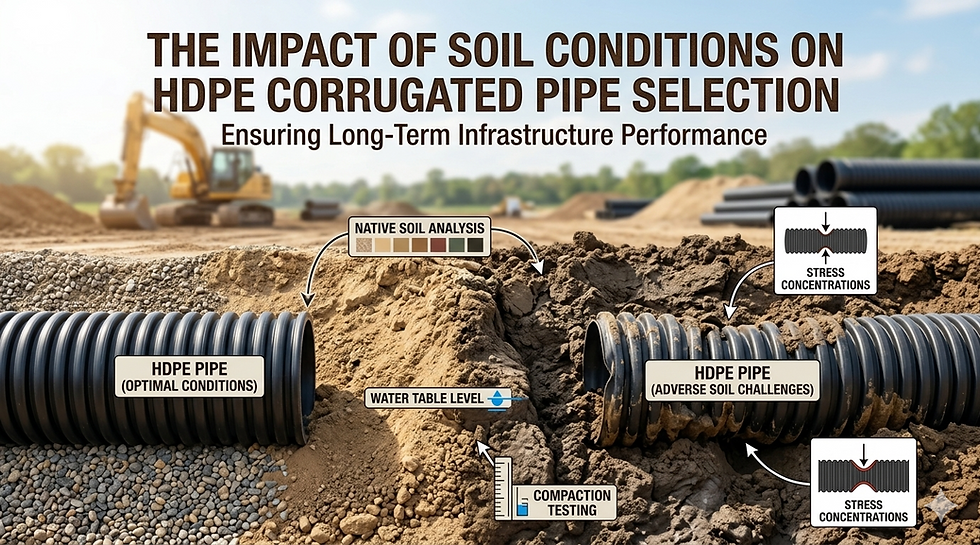
When it comes to underground infrastructure projects, selecting the right drainage or conduit solution requires more than just picking the cheapest option available. Soil conditions play a fundamental role in determining whether an HDPE corrugated pipe will perform reliably over its intended lifespan. Engineers and contractors who overlook this critical factor often end up dealing with costly failures, premature deterioration, and project delays that could have been avoided with proper planning.
Understanding Soil Types and Their Characteristics
Before diving into how soil affects pipe performance, it's worth understanding what makes different soils behave differently. Soil composition varies widely depending on geographic location, geology, and previous land use. Sandy soils drain quickly and offer excellent support for buried structures. Clay soils, on the other hand, retain moisture and can create challenging conditions for pipes because of their tendency to shift and settle unevenly. Silt falls somewhere in the middle, while organic soils and peat can be particularly problematic due to their instability and decomposition rates.
The particle size distribution in soil directly influences how water moves through and around buried pipes. In well-draining soils, water moves freely, reducing hydrostatic pressure on pipe walls. In poorly draining soils, water accumulates and exerts constant pressure on the structure. This is where HDPE corrugated pipes excel compared to rigid alternatives, but even these flexible pipes have limits based on the soil environment they're buried in.
Soil pH and Chemical Composition
Acidity and alkalinity of soil matter more than many contractors realize. HDPE is chemically resistant and doesn't corrode like metal pipes, but acidic soils can still influence the long-term performance of the pipe and its surrounding backfill. Highly acidic soils, particularly those with pH below 4.0, can degrade certain traditional concrete pipes and create conditions that weaken soil structure around the pipe installation.
The presence of sulfates in soil presents another consideration. Sulfate content becomes critical when selecting backfill materials around the pipe. An HDPE corrugated pipe manufacturer typically recommends specific backfill materials based on the soil conditions at the project site. Using incompatible backfill in sulfate-rich soils can lead to accelerated deterioration of the support structure and loss of pipe integrity.
Salinity also factors into the decision-making process. Coastal areas and regions with saline groundwater require careful consideration of all materials used in the installation. While HDPE itself resists salt intrusion, other components of the system may not, and salt can affect soil compaction and stability around the pipe.
Load Bearing Capacity and Settlement Patterns
Different soils have vastly different load-bearing capacities. Cohesive soils like clay can support significant loads once properly compacted, but they're also prone to differential settlement when water content changes. Granular soils like sand and gravel compact more easily and provide more consistent support, but they offer less resistance to lateral movement.
When HDPE corrugated pipes are installed in soils with poor bearing capacity, the flexible nature of the pipe becomes both an advantage and a consideration. The corrugations allow the pipe to distribute loads across a wider area, but the surrounding soil must still be properly prepared and compacted. Inadequate soil preparation in weak soils can result in excessive pipe deflection, which reduces flow capacity and can eventually lead to pipe collapse under external loads.
Settlement patterns differ between soil types, and uneven settlement can stress the pipe joints and cause misalignment. In areas where differential settlement is likely, selecting an HDPE corrugated pipe with tight tolerances and proper joint design becomes essential. The flexibility that makes these pipes suitable for variable conditions also means they need quality installation with proper bedding and backfill procedures.
Moisture and Drainage Considerations
The water table position and seasonal moisture variations significantly impact pipe performance. In areas where the water table fluctuates seasonally, the pipe experiences varying levels of hydrostatic pressure throughout the year. HDPE corrugated pipes handle this variation well due to their flexibility, but constant saturation in poorly draining soils can create other problems.
Inadequate drainage around the pipe leads to water accumulation, increased external pressure, and potential soil instability. This is why proper drainage design and material selection are not afterthoughts. An experienced HDPE corrugated pipe manufacturer designs products with specifications that account for these conditions, including wall thickness, corrugation profile, and perforation patterns for drainage applications.
In situations where the soil is naturally poorly draining, engineers must design more robust drainage systems around the pipe installation. This might include aggregate layers, filter cloth, or additional drainage conduits to channel water away from the main pipe. The pipe itself may need to be specified with a heavier gauge or different corrugation profile to handle the additional external loads created by water pressure.
Corrosive Soil Environments
Certain soil conditions create corrosive environments that quickly degrade traditional pipe materials. Acidic soils, soils with high organic content, and sulfide-rich soils fall into this category. HDPE's resistance to chemical attack makes it an attractive choice for these applications, but the entire system still requires careful design.
Aggressive soil conditions can affect concrete or metal fittings, connection sleeves, and support structures. When specifying HDPE products for corrosive soil environments, every component of the installation must receive equal consideration. An HDPE corrugated pipe manufacturer that understands aggressive soil chemistry will ensure that recommended installation methods and materials can withstand the specific environment.
The longevity advantage of HDPE in corrosive soils becomes apparent after five to ten years when traditional alternatives begin showing signs of degradation. Projects that cost slightly more upfront due to specification of higher-quality HDPE solutions often prove to be the most economical over a twenty to fifty-year service life.
Frost Heave and Freeze-Thaw Cycles
In cold climates, frost heave presents a serious threat to buried infrastructure. When soil freezes, water in the soil expands, creating upward pressure that can lift and displace pipes. Soils with high silt and clay content are particularly prone to frost heave because they retain more water.
HDPE corrugated pipes tolerate movement and deflection better than rigid alternatives, but prevention remains better than accommodation. In areas with significant frost heave risk, proper pipe burial depth and insulation considerations become important. The flexibility of HDPE means the pipe can survive some movement, but proper installation practices and soil preparation are still necessary.
The freeze-thaw cycle also affects the surrounding soil structure. Repeated freezing and thawing can change soil density and create settling, which then affects the pipe. Using appropriate bedding materials and maintaining proper drainage helps mitigate these effects across all soil types.
Practical Considerations for Project Design
Selecting the right HDPE corrugated pipe for a specific project starts with understanding the soil conditions at the installation site. A proper soil investigation should include boring logs, soil testing for pH, chemical composition, and compaction characteristics. This information guides decisions about pipe wall thickness, corrugation profile, and joint specifications.
The design process should also account for seasonal variations and long-term site changes. A pipe installed in today's water table elevation might face different conditions in fifty years due to climate change or development patterns. HDPE's longevity and flexibility provide good insurance against some of these uncertainties.
Proper installation is just as important as material selection. Even the best pipe installed without adequate soil preparation and compaction will underperform. Working with contractors experienced in HDPE installations and specifying proper backfill materials based on soil analysis helps ensure the long-term success of any underground infrastructure project.
Conclusion
Soil conditions fundamentally influence HDPE corrugated pipe performance and longevity. Sandy, well-draining soils present fewer challenges and allow for more flexibility in design choices. Clay-heavy soils with poor drainage require more careful specification and installation. Corrosive soils demand attention to all system components, not just the pipe itself. Every project is unique, and understanding the specific soil characteristics at your installation site is essential for making the right pipe selection.
Taking time to properly evaluate soil conditions before specifying materials pays dividends throughout the project lifecycle. Whether you're working with an HDPE corrugated pipe manufacturer to select the optimal product or managing a complex underground installation project, letting soil conditions guide your decisions ensures a durable, reliable infrastructure solution that serves its purpose for decades to come.


Comments